- Why a cool bedroom helps you sleep
- How cool should a bedroom be? Starting points by situation
- Room too hot to sleep? A checklist of fixes
- What if the room is too cold?
- A warm bath or shower can help, even though the room is cool
- How to find your own best sleeping temperature
- When temperature isn't the real problem
- Next steps
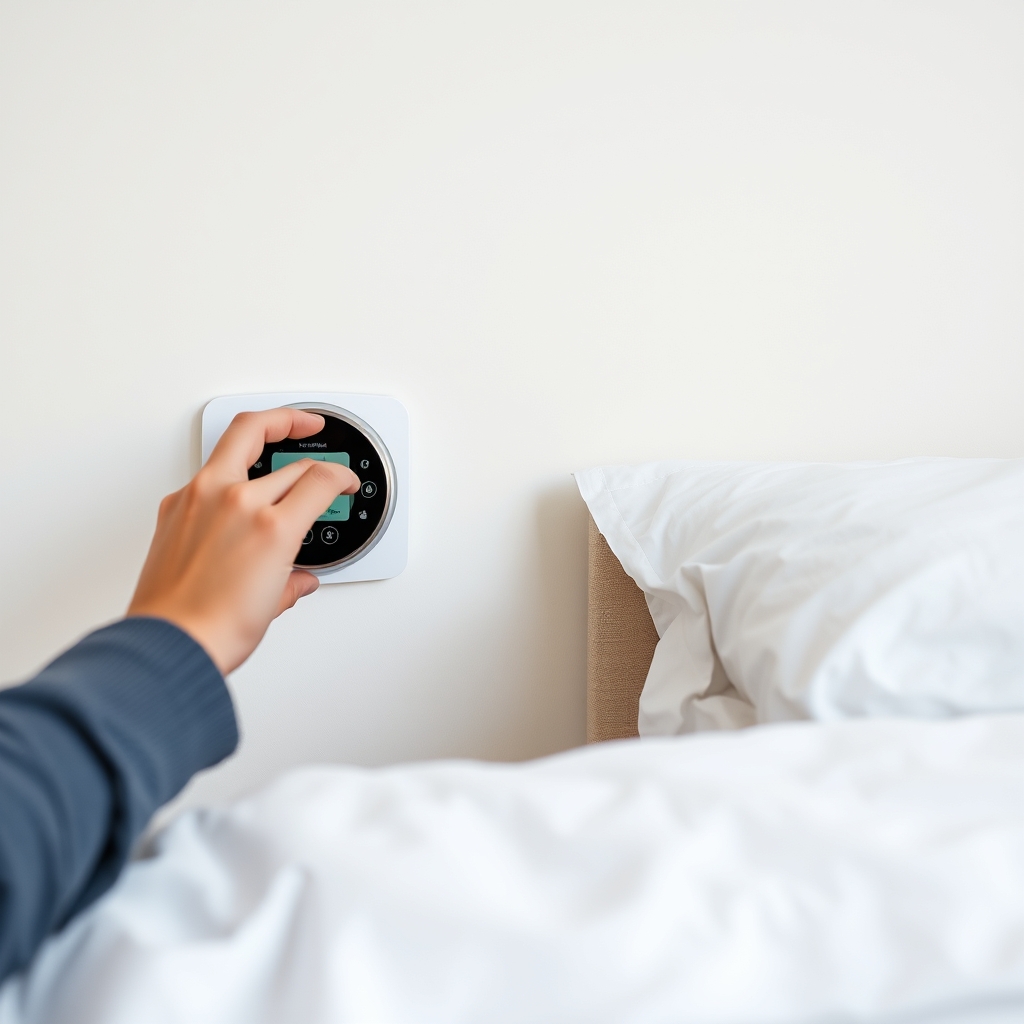
For most adults, the best temperature for sleeping is a cool bedroom, commonly cited as about 60 to 67°F (15 to 19°C), with 65°F (18°C) a good starting point. Bedding, humidity, age and personal preference shift the sweet spot, so test within that range for a week or two.
The best temperature for sleeping, for most adults, is a cool bedroom. A commonly cited range is roughly 60 to 67°F (about 15 to 19°C), and 65°F (18°C) is a sensible starting point. Treat it as a range to test, not a rule.
The ideal bedroom temperature for sleep shifts with your bedding, sleepwear, humidity, age and body. Two people in the same room can need different setups. That's why the useful question is less "what number?" and more "how do I find mine?"
This page gives you the range, a quick way to adjust it, fixes for a room that's too hot to sleep in, and a note on when temperature isn't the real issue. We're an independent publication, and this is general information, not medical advice.
- Start around 65°F (18°C) and move in small steps within roughly 60 to 67°F (15 to 19°C).
- Aim to feel comfortably cool when you get into bed, not cold.
- Bedding and sleepwear often matter as much as the thermostat.
- Infants, older adults and people with health conditions should ask a qualified professional about safe temperatures.
Why a cool bedroom helps you sleep
Your core body temperature naturally drifts down in the evening as you get ready for sleep. A cool room supports that drop, while a warm room may work against it. Heat can also bring sweating, tossing and lighter, more broken sleep.
Cool air doesn't mean cold bedding. The goal is a cool room with a warm-enough cocoon under the covers, so you can adjust by adding or removing a layer rather than fighting the room itself.
How cool should a bedroom be? Starting points by situation
Use this table as a place to begin, then fine-tune. These are starting points based on general guidance, not prescriptions.
| Situation | Try this first |
|---|---|
| Typical adult | Around 65°F (18°C) |
| You run hot or wake sweaty | Lower end of the range (about 60 to 63°F / 15.5 to 17°C), plus breathable bedding |
| You run cold or wake shivering | Upper end of the range (about 66 to 67°F / 19°C), plus an extra layer you can kick off |
| Sharing a bed | Settle on a middle temperature and use separate blankets or layers |
| Older adult or health condition | Ask your clinician what is comfortable and safe for you |
| Infant | Follow your pediatrician and current safe-sleep guidance, not an adult number |
Room too hot to sleep? A checklist of fixes
Start with the free and cheap options. Work down the list until the room feels right.
- Block daytime heat: close blinds or curtains on sunny windows before the room warms up.
- Use cooler outside air: open windows in the evening or overnight if it's cooler outside than inside.
- Move the air: a fan can make the same temperature feel noticeably cooler.
- Lighten the bed: switch to breathable sheets and a lighter cover. Natural fibers like cotton or linen are popular choices.
- Dress for it: loose, light sleepwear, or less of it.
- Cut heat sources: turn off electronics and avoid cooking or hot appliances close to bedtime.
- Cool yourself: a lukewarm or cool shower can help you feel comfortable at bedtime.
Our guide to free and low-cost bedroom setup changes covers more of these. If you're also fighting light and noise, see how to make your bedroom dark and quiet without spending money. Blackout curtains help with both light and heat.
What if the room is too cold?
It can happen too. A very cold room can make it harder to settle and may wake you. If you're tensing up or curling tight, you're probably past your range.
Warm the room a degree or two, or add layers you can remove. Warm socks work for some people. Avoid heaping on so much that you overheat later in the night.
 Recommended for youBedroom Setup for Better Sleep: Free and Low-Cost Changes
A warm bath or shower can help, even though the room is cool
It sounds backwards, but a warm bath or shower before bed is often suggested to help you wind down. The idea is that your body cools afterward. Timing and effect vary from person to person. Our page on warm baths and showers before bed goes through what to expect.
How to find your own best sleeping temperature
Rather than chase a perfect number, run a short experiment. You only need a thermometer (or your thermostat reading) and a notebook.
- Pick a starting temperature near 65°F (18°C), or the closest you can manage.
- Keep bedding and sleepwear the same for three to four nights so you're only changing one thing.
- Each morning, note how long you took to fall asleep, whether you woke hot or cold, and how rested you feel.
- Shift by 1 to 2 degrees, or change one layer, and repeat.
- Keep the setup that gives you the fewest hot or cold wake-ups.
A free sleep diary template makes this easier. Change one variable at a time, and don't judge a setting on a single night. Other things, like stress, caffeine or a late meal, can swamp the effect of temperature.
See the details, current pricing and who it suits.
Check current optionsAffiliate link: we may earn a commission at no extra cost to you.When temperature isn't the real problem
If you've sorted the room and still wake at 3 AM, or feel unrefreshed, the cause may lie elsewhere: schedule, stress, light, caffeine or an underlying condition. Our guide to trouble sleeping through the night walks through common causes and signs. The sleep better without buying anything guide collects the no-cost habits worth trying first.
Persistent night sweats, loud snoring with gasping, or long-lasting insomnia are worth raising with a doctor. Heat isn't always the cause, and a clinician can check.
Some people also look at supplements. No supplement changes your room temperature, and a cool, comfortable bedroom is a free baseline to get right first. If you're weighing one anyway, our page on whether YU SLEEP (Sleep and Dreams) is right for you covers what its official page says and where the gaps are. If you have a medical condition or take medication, read who should skip it or ask a doctor first before deciding.
Next steps
Set your room near 65°F (18°C), adjust your bedding, and give each change a few nights. Then look at the other bedroom factors: evening light and screens and what you eat and drink before bed.
If you keep waking in the night, see sleep aids for waking at 3 AM for an overview of the options, including their limits.
Frequently asked questions
What is the best temperature for sleeping?
For most adults, a cool bedroom of roughly 60 to 67°F (15 to 19°C) is the commonly cited range, and 65°F (18°C) is a sensible starting point. Your ideal number depends on bedding, sleepwear, humidity and personal preference, so adjust in small steps and notice how you sleep.
How cool should a bedroom be for sleep?
Cool enough that you feel comfortably cool when you first get into bed, not cold. Many people land between about 60 and 67°F (15 to 19°C). If you wake sweaty, go cooler or lighten your bedding. If you wake shivering, warm the room slightly or add a layer.
Why can't I sleep when my room is too hot?
Your body temperature naturally drifts down as you prepare for sleep, and a warm room may make that harder. Heat can also cause sweating, restlessness and lighter, more broken sleep. Cooling the room, using breathable bedding and keeping air moving are the usual first fixes.
Is 70 degrees too hot for sleeping?
70°F (21°C) is a little above the range most often suggested, but it isn't a problem for everyone. Light bedding, a fan and breathable sleepwear can make it comfortable. If you wake hot or sweaty at that temperature, try a few degrees cooler.
Is it bad to sleep in a cold room?
A cool room is generally fine, but a very cold one can be uncomfortable and may wake you. Aim for cool air with warm bedding rather than a freezing room. Older adults and people with certain health conditions should ask a clinician what temperature is safe and comfortable for them.
What temperature should a baby's room be?
Don't rely on adult sleep guidance for infants. Follow your pediatrician's advice and current safe-sleep recommendations for room temperature, clothing and bedding. Overheating is a concern for babies, so check with a qualified professional rather than copying an adult number.
How can I cool my room for sleep without air conditioning?
Block sun on windows during the day, open windows when outside air is cooler, and use a fan to move air. Switch to lighter, breathable sheets and sleepwear, and consider a cool shower before bed. Each helps a little, and together they can make a noticeable difference.
Keep reading
 Warm Bath or Shower Before Bed: Does It Help You Fall Asleep?Does a warm bath before bed for sleep work? Learn how body temperature affects sleep, how long befo…
 Sleep Diary Template: How to Track Your Sleep for FreeA sleep diary template is the cheapest sleep tool there is: a simple log you fill in each day, on p…
 Sleep Better Without Buying AnythingSleep better without buying anything: free, evidence-based habits for schedule, light, bedroom, win…