- What counts as trouble sleeping through the night?
- Signs your night waking has a pattern
- Common causes of waking during the night
- The 3 a.m. wake-up: a pattern, not a diagnosis
- Red flags: when to stop self-troubleshooting
- How to track your night waking for two weeks
- Free fixes to try first
- Where sleep supplements fit (and where they don't)
Trouble sleeping through the night usually comes from a mix of habits (alcohol, caffeine, late meals), stress, hormones, the bedroom, or a medical issue such as sleep apnea. Track your pattern for two weeks, fix the basics first, and see a clinician if you have red-flag symptoms or daytime impairment.
If you have trouble sleeping through the night, you are dealing with a very common and very fixable-sounding problem that often has more than one cause. You fall asleep fine, then wake at some point and either lie there or doze badly until the alarm. The cause might be a habit, a stress load, a hormone shift, your bedroom, or a medical condition that needs a professional.
This guide is the overview for our night-waking series. It helps you work out what kind of waking you have, which causes are most likely, what to track, and when to stop troubleshooting on your own. It also covers where sleep supplements fit, including the product this site focuses on, Yu Sleep, with the downsides stated plainly.
Nothing here is medical advice. It is general information meant to help you decide what to try and whom to ask.
- Brief awakenings are normal. A pattern that leaves you impaired during the day, or lasts for weeks, deserves attention.
- When you wake, and what else is going on (snoring, sweats, stress, drinks, medications), points toward likely causes.
- Track two weeks of simple notes before changing everything at once.
- Fix the free basics first: alcohol, caffeine and meal timing, light, noise, temperature and a steady schedule.
- Supplements are optional, not a diagnosis. Check interactions and your health situation first.
What counts as trouble sleeping through the night?
Sleep is not one flat block. You move through lighter and deeper stages in cycles, and it is normal to surface briefly between them. Most of those moments pass without you remembering them.
Researchers and clinicians usually separate two different complaints. Trouble falling asleep is about the start of the night. Trouble staying asleep, also called sleep maintenance trouble, is about waking after you have already dropped off or waking too early and not getting back down. This guide focuses on the second, though the two often overlap.
Normal waking versus a pattern worth acting on
A single bad night after a stressful day, a late dinner or a few drinks is not a disorder. What matters is frequency, duration and what it does to your days. Use this quick checklist:
- You wake most nights, not occasionally.
- You are awake long enough that you check the clock, get up, or feel frustrated.
- The pattern has gone on for weeks.
- You feel unrefreshed, foggy, irritable or sleepy during the day.
- You dread bedtime because you expect to wake.
If you tick two or three of these, start tracking. If you tick the daytime items strongly, especially sleepiness while driving or working, talk to a clinician sooner rather than later.
How much sleep are you actually aiming for?
Major US health bodies, including the CDC and the American Academy of Sleep Medicine, publish recommended sleep ranges by age. Check those sources for the current numbers rather than relying on a rule of thumb. The needs of children differ from adults, so if you are wondering about a child, see our short answer on how much sleep an 11-year-old needs.
Signs your night waking has a pattern
The details of your waking are clues. You do not need to diagnose yourself, but noting the pattern helps you pick the right page, and the right professional if needed.
| What you notice | Possible directions to explore | Where to read more |
|---|---|---|
| Waking around the same time most nights, often in the small hours | Alcohol or late caffeine, stress, light or noise, hormones, or a sleep disorder | Why do I wake up at 3am? |
| Waking after evening drinks or a heavy late meal | Alcohol, caffeine or meal timing effects on sleep | Alcohol, caffeine and late meals |
| Waking with a racing mind, to-do lists or dread | Stress and an overactive evening routine | Stress, cortisol and night waking |
| Waking hot or sweaty, with cycle or life-stage changes | Hormonal shifts such as perimenopause or menopause | Menopause, hormones and night waking |
| Waking gasping, with loud snoring or a partner noticing pauses in breathing | Possible sleep apnea, which needs medical evaluation | Sleep apnea vs insomnia |
| Waking groggy even after a full night in bed | Fragmented sleep, schedule, medications or another condition | Morning grogginess |
These are directions, not diagnoses. Several can be true at once, which is why a log (below) beats guessing.
Common causes of waking during the night
Night waking is rarely a mystery with one answer. The causes below are the ones most often discussed in general sleep guidance. Read them as a menu to check against your own log.
Alcohol, caffeine and late meals
These are the easiest to test because you control them. Alcohol can make you drowsy at first but is commonly associated with lighter, more fragmented sleep later in the night. Caffeine can linger well past the time you drank it, and sensitivity varies from person to person.
Large or late meals can cause discomfort or reflux when you lie down. Our guide to how alcohol, caffeine and late meals cause night waking walks through a simple way to test each one.
Stress and a busy mind
If you wake and your thoughts start immediately, stress is a likely contributor. Work pressure, money, caregiving and unresolved tasks all show up at night when distractions fall away. People often describe waking with a sense of alertness rather than sleepiness.
Stress-related waking tends to improve with a consistent wind-down, a way to park tomorrow's tasks on paper, and sometimes professional support. See stress, cortisol and night waking in busy professionals for practical steps.
Hormones and life stage
Hormonal change can disrupt sleep. Perimenopause and menopause are commonly linked to night sweats and lighter sleep. Pregnancy and breastfeeding also change sleep, and they raise separate questions about what is safe to take.
If this fits you, read menopause, hormones and night waking in women. If you are pregnant, our page on why not to use Yu Sleep during pregnancy and safer options to discuss explains the reasoning, and your prenatal clinician should guide any sleep aid decision.
Sleep disorders and medical conditions
Sleep apnea, restless legs, chronic pain, reflux, anxiety, depression and thyroid or other conditions can all fragment sleep. Some are easy to miss because you do not remember waking. A partner may notice snoring or breathing pauses before you do.
It is easy to assume you have "insomnia" when something else is going on. Our comparison of sleep apnea vs insomnia lists signs that suggest another cause. For men, frequent nighttime urination is another reason to ask a clinician about the underlying cause; see sleep supplement safety for men.
Medications and substances
Some prescription and over-the-counter medicines, nicotine, and cannabis or CBD products can affect sleep, either through timing, stimulation or withdrawal effects. If your night waking began after a medication change, bring that up with your prescriber or pharmacist rather than stopping anything yourself.
Your bedroom and your schedule
Light, noise, a warm room, an uncomfortable mattress or a pet in the bed can all break up sleep. An irregular schedule, with big shifts between weekdays and weekends, can also make sleep less stable. Both are cheap to address. See our guides on making your bedroom dark and quiet without spending money and the best temperature for sleeping.
If you are curious about the body's natural timing, our short answer on the most natural time of sleep for humans gives context, though your own schedule and responsibilities still matter.
The 3 a.m. wake-up: a pattern, not a diagnosis
Waking in the early hours is one of the most searched forms of night waking. It is not a medical diagnosis, and the cause differs between people. For one person it is the effect of evening drinks. For another it is a warm room, stress or a hormonal change.
It helps to treat the time as data. Does it happen every night or only after certain evenings? Can you get back to sleep? Are you hot, thirsty, needing the bathroom, or alert with worries? Our two pages cover this in depth: why you wake up at 3am explains the common causes and patterns, and how to stop waking up at 3am gives step-by-step fixes.
Red flags: when to stop self-troubleshooting
Self-help is reasonable for mild, recent, habit-linked waking. It is not the right approach when the signs point to something medical. Contact a qualified clinician if any of these apply:
- Loud snoring with gasping, choking or witnessed pauses in breathing.
- Severe daytime sleepiness, or nodding off while driving or at work.
- Chest pain, shortness of breath or palpitations at night.
- Persistent low mood, anxiety, or thoughts of self-harm. If you are in crisis, contact local emergency services or a crisis line right away.
- Night waking that has lasted several weeks despite sensible changes.
- New or worsening symptoms after starting or changing a medication.
- Pregnancy, breastfeeding, or a complicated medical history, before adding any supplement.
How to track your night waking for two weeks
A simple log turns a vague complaint into a pattern you can act on. It also gives a clinician something specific. It takes a couple of minutes a day.
- Write down your bedtime and wake time each morning, including the time you finally got up.
- Note each waking: roughly when, how long you were awake, and what you were thinking or feeling (hot, anxious, needing the bathroom, noise).
- Record the evening before: caffeine (and time of the last one), alcohol, meal timing, exercise, screens, and any medication or supplement.
- Rate stress for the day on a simple scale you define, such as low, medium or high.
- Add physical clues: snoring reported by a partner, night sweats, pain, reflux, restless legs, bathroom trips.
- Rate how you feel the next day: refreshed, okay or foggy.
- Change one thing at a time after the first week, such as moving your last drink earlier, and compare.
- Review at the end of two weeks and look for links between evenings and bad nights.
Keep it honest rather than perfect. The goal is to notice, for example, that your wake-ups cluster on nights with evening drinks or late work emails.
See the details, current pricing and who it suits.
Check current optionsAffiliate link: we may earn a commission at no extra cost to you.Free fixes to try first
Before spending money, run through the basics for at least a couple of weeks. They are low-risk and, importantly, they clarify whether anything else is needed.
- Anchor your wake time. A regular rise time, even on weekends, tends to steady your schedule.
- Move caffeine earlier. Try cutting off caffeine well before the afternoon and see how you sleep.
- Test alcohol. Try two weeks with no evening drinks, or drinks much earlier, and compare logs.
- Finish eating earlier. Smaller, earlier evening meals can help if reflux or discomfort wakes you.
- Cool, dark, quiet. Block light, reduce noise and keep the room comfortably cool.
- Build a wind-down. A consistent 20 to 30 minute routine of dim lights and low-stimulation activities.
- Park your worries. Write tomorrow's tasks on paper before bed so your mind does not rehearse them at 3 a.m.
- Get out of bed if awake for a long time. Do something quiet in dim light and return when sleepy, rather than lying there frustrated.
For a fuller no-cost plan, see sleep better without buying anything.
Where sleep supplements fit (and where they don't)
Many people reach for a supplement after the basics are not enough. That is a reasonable thing to consider, as long as you treat it as an optional add-on rather than a diagnosis or a cure. Supplements vary widely in what they contain, how much, and how well the evidence supports them. Our comparison of sleep aid types: drops, gummies, capsules and powders covers the format differences.
What the Yu Sleep page says it is
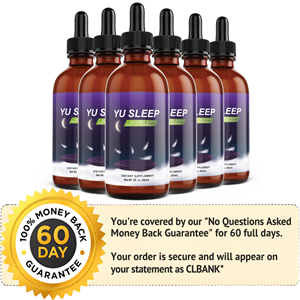
Yu Sleep is a liquid taken by dropper. Its official sales page describes it as a "nano-enhanced sleep formula" and directs buyers to take 2 droppers 30 minutes before bed. It says it is designed to help people fall asleep faster, stay asleep through the night (it mentions 3 AM wake-ups) and wake refreshed.
The page lists ten ingredients, counting vitamins B6 and B2 separately: red tart cherry extract, 5-HTP, vitamin B6, vitamin B2, magnesium glycinate, apigenin, lemon balm extract, L-theanine, melatonin and GABA. The only dose it gives is 0.9 mg of melatonin per serving. For a closer look, see what's inside Yu Sleep and how it works.
How to weigh it honestly
We have not used this product and we do not repeat the page's testimonials or review counts as evidence. Here is what we can say about the claims and the gaps:
| Point | What the page says | What to keep in mind |
|---|---|---|
| Purpose | Helps with falling asleep, staying asleep and waking refreshed | These are the seller's claims. The page cites no studies in the text we reviewed. |
| Credibility | Credits "Dr. Collins" and "decades of research" | The text we saw gives no credentials or institution for Dr. Collins. |
| Ingredient amounts | Lists ingredients; gives 0.9 mg only for melatonin | Without other amounts, you cannot judge or compare doses. |
| Purchase size | Sells only minimum 2-month packages | You cannot try a smaller pack. Prices are shown as discounted "while supplies last," so confirm on the official page. |
| Guarantee | Advertises a 60-day guarantee | The text we saw gives no terms. Read the full terms before buying. |
| Timeline | Says many people notice changes within days and that a fuller reset takes 3 to 6 months | A long timeline means a larger commitment before you can judge it. |
| Disclaimers | We did not see a disclaimer in the text we reviewed | Check the full page footer for medical and results disclaimers. |
If you want to compare cost, ordering details and refund questions, our guide to buying Yu Sleep covers them, and who Yu Sleep is for, and who should skip it helps you decide whether it fits. When you are ready for a short verdict, our recommendation page on whether YU SLEEP is right for you pulls the considerations together.
Safety checks before you try any sleep supplement
Natural does not mean risk-free. Ingredients such as melatonin and 5-HTP are the kind people on certain medications are often advised to check with a clinician or pharmacist about, and herbal ingredients can interact too. This applies to any product, not only Yu Sleep.
- List everything you take, including prescriptions, over-the-counter products, herbs and CBD or cannabis.
- Ask a pharmacist or clinician about interactions, especially if you take antidepressants, blood thinners, sedatives or medicines for blood pressure or diabetes.
- Check your situation. Pregnancy, breastfeeding, a planned surgery or a chronic condition each call for professional input first.
- Do not combine with alcohol or other sedating substances without advice.
- Stop and seek advice if you develop unusual symptoms, and do not use a supplement to push through daytime drowsiness, particularly when driving.
- Read the full label and terms on the official page, and screenshot what you agreed to.
Our safety pages go deeper: sleep supplements and medications: who should talk to a doctor first, sleep supplement safety for men and sleep supplement safety for women. For product-specific questions, see Yu Sleep safety, side effects and practical questions.
In this guide series
Use this list as a map. Start with the page that matches your pattern.
- Why Do I Wake Up at 3am? Common Causes and Patterns: the most common reasons for early-hours waking and how to read your own pattern.
- How to Stop Waking Up at 3am: Step-by-Step Fixes: a practical sequence to try.
- Alcohol, Caffeine and Late Meals: How They Cause Night Waking: how to test the habits you control.
- Stress, Cortisol and Night Waking in Busy Professionals: when a busy mind keeps you
Frequently asked questions
Why do I keep waking up in the middle of the night?
Common contributors include alcohol, caffeine, late meals, stress, an uncomfortable bedroom, hormonal changes, medications and sleep disorders such as sleep apnea. Often several factors overlap. A two-week sleep log showing when you wake and what happened that day helps you spot patterns and gives a clinician something concrete to review.
Is it normal to wake up during the night?
Brief awakenings are a normal part of sleep, and many are forgotten by morning. It becomes a problem when you struggle to get back to sleep, wake often, or feel impaired the next day. If that pattern continues for weeks, it is worth tracking and discussing with a clinician.
When should I see a doctor about waking at night?
See a clinician if you have loud snoring with gasping or breathing pauses, chest pain, severe daytime sleepiness, low mood, or night waking that persists for weeks. Also check in if you take medications or are pregnant, breastfeeding or going through menopause. This guide is general information, not medical advice.
Can a sleep supplement fix trouble staying asleep?
No supplement can be promised to fix it. If the cause is alcohol timing, stress, a hot room, hormones or sleep apnea, a supplement may not address it and could hide a problem that needs care. Fix the basics first, and check with a clinician or pharmacist about interactions before trying one.
Does Yu Sleep help you stay asleep through the night?
The official page says it is designed to help people stay asleep, and it mentions 3 AM wake-ups. We have not used the product and the page cites no studies, so we cannot confirm that. Treat it as a claim to weigh, check the full guarantee terms, and talk to a clinician if you take medication.
What should I track before talking to a clinician about sleep?
Note bedtime, wake times, how long you stayed awake, caffeine, alcohol and meal timing, stress level, medications, and any snoring, night sweats, pain or bathroom trips. Add how you feel the next day. Two weeks of simple notes is usually more useful than trying to recall details from memory.
Does alcohol help you stay asleep?
Alcohol may make you feel drowsy, but it is commonly linked to lighter, more broken sleep later in the night. If you wake in the second half of the night, try moving drinks earlier or skipping them for a couple of weeks and compare your sleep log before and after.
In this section
GuideWhy Do I Wake Up at 3am? Common Causes and PatternsWhy do I wake up at 3am? Learn the common causes, how to spot your pattern, what to try first, and when night…
Read GuideHow to Stop Waking Up at 3am: Step-by-Step FixesHow to stop waking up at 3am: a calm, step-by-step guide to likely causes, habit fixes, what to do in the mom…
Read GuideMorning Grogginess: Why You Wake Up Groggy and How to Reduce ItWhy do I wake up groggy? Learn sleep inertia causes, what helps you reduce grogginess in the morning, and whe…
Read GuideSleep Apnea vs Insomnia: Signs Your Night Waking May Have Another CauseSleep apnea vs insomnia: compare signs of sleep apnea at night, like gasping and snoring, with insomnia patte…
Read GuideAlcohol, Caffeine and Late Meals: How They Cause Night WakingAlcohol and waking up at night, plus caffeine and late meals: how each can fragment sleep, why 3am wake-ups h…
Read GuideStress, Cortisol and Night Waking in Busy ProfessionalsIf you are dealing with stress and waking up at night, you are in large company. Deadlines, inboxes and late…
Read GuideMenopause, Hormones and Night Waking in WomenMenopause waking up at night is common. Learn how hormones, night sweats and perimenopause insomnia disrupt s…
Read GuideSleep Supplement Safety for Women: Pregnancy, Breastfeeding and Hormone ConsiderationsIf you are asking whether sleep supplements are safe during pregnancy or while nursing, the honest short answ…
Read GuideSleep Supplement Safety for Men: Apnea, Nighttime Urination and Medication ChecksSleep supplement safety for men: how apnea, nighttime urination and medications change the risk, plus a check…
Read GuideSleep Supplements and Medications: Who Should Talk to a Doctor FirstSleep supplement drug interactions explained: who should check with a doctor first, with notes on antidepress…
Read AnswerHow much sleep does an 11-year-old need?How much sleep does an 11 yo need? Most health bodies advise 9 to 12 hours for ages 6-12. See bedtime math, w…
Read AnswerWhat is the most natural time of sleep for humans?What is the most natural time of sleep for humans? Learn what biphasic sleep and first and second sleep histo…
Read