- What actually helps you sleep, ranked by effort
- Fix your schedule and get light at the right times
- Make your bedroom dark, quiet and comfortably cool
- Caffeine, food, alcohol and exercise: timing beats willpower
- Wind down: breathing, relaxation and clearing your head
- If you keep lying awake: CBT-I techniques you can try at home
- A two-week free sleep plan
- Where supplements fit, and when to see a doctor
You can sleep better without buying anything by fixing your wake-up time, getting daylight, dimming evening light, cutting late caffeine, cooling and darkening your bedroom, and winding down. If insomnia persists, CBT-I techniques are free to try at home. See a clinician if problems last or feel serious.
If you want to sleep better without buying anything, you have more options than the sleep industry tends to suggest. The habits with the strongest track record are free: when you wake, how much light you get, what you consume in the afternoon and evening, how your bedroom feels, and how you handle the minutes before and after lights out. None of them need a gadget, a mattress topper or a subscription.
This guide is the overview for everything on Nightfall Notes about free and low-effort sleep improvement. It tells you what to try first, how to sequence changes so you can tell what is working, and when free habits are not enough. Each section links to a deeper page if you want the full detail.
We are an independent publication. We write plainly, we cite only what public research and official pages support, and we name the downsides, including the downsides of free methods. Nothing here is medical advice, and persistent sleep problems deserve a qualified professional.
- Start with a fixed wake-up time and daylight soon after waking. These two changes shape most of what follows.
- Dim your evenings, cut late caffeine, and make the bedroom dark, quiet and comfortably cool.
- Build a wind-down you will actually do: breathing, muscle relaxation, a brain dump, or a warm shower.
- If you lie awake regularly, CBT-I techniques such as stimulus control are the best-supported free next step.
- Change one or two things at a time and track results in a sleep diary for at least a couple of weeks.
- See a clinician for snoring with gasping, long-lasting insomnia, or anything that affects your safety or mood.
What actually helps you sleep, ranked by effort
Most sleep advice online is a long list with no sense of priority. A better approach is to sort habits by how much they cost you in effort and how well they are supported. The table below is our general ordering, drawn from widely accepted sleep-health guidance. Your own starting point may differ.
| Habit | Cost | Effort | Most useful if you… |
|---|---|---|---|
| Consistent wake-up time | Free | Medium (it takes discipline at weekends) | Have an irregular schedule or feel groggy in the morning |
| Morning daylight | Free | Low | Feel sleepy late in the day but wired at bedtime |
| Earlier caffeine cutoff | Saves money | Low to medium | Drink coffee, tea or energy drinks into the afternoon |
| Bedroom setup | Free to low | Low | Wake to light or noise, or sleep too warm |
| Evening light control | Free | Low | Spend late evenings under bright lights or on screens |
| Wind-down routine | Free | Low | Feel mentally busy at bedtime |
| CBT-I techniques | Free to try at home | High | Have had trouble sleeping for weeks or longer |
Notice what is missing: any item that must be purchased. That does not mean products never help. It means you can usually learn a lot about your own sleep before spending a cent.
One benchmark helps frame your goals. Major US health bodies, including the CDC and the American Academy of Sleep Medicine, recommend that adults get seven or more hours of sleep a night. Needs differ between people, so treat that as a guide and watch how you feel and function during the day.
Fix your schedule and get light at the right times
Anchor your wake-up time
Your body clock responds more to when you get up than to when you go to bed. A steady wake-up time, including weekends, gives your internal clock a reliable reference point. It also lets sleep pressure, the drive to sleep that builds the longer you are awake, accumulate properly.
If your schedule is currently all over the place, do not try to fix it in one night. Shift your wake-up time earlier in small steps and hold each step for a few days. Our gradual sleep schedule reset plan walks through this in detail.
The downside is real: a fixed wake-up time feels harsh after a bad night. You will be tempted to sleep in. A short, early nap can soften the cost, and our page on napping without ruining your night covers how to do that.
Get daylight early, dim the lights late
Light is the strongest signal your body clock receives. Bright light in the morning helps set the clock and generally supports sleepiness at the right time later. Outdoor light is far brighter than typical indoor lighting, even on a cloudy day, so a short time outside counts for more than you might expect. See morning sunlight and your body clock for practical ways to fit it in.
In the evening, aim for the opposite. Lower the overhead lights, use lamps, and keep screens at a distance or at lower brightness. The picture is more nuanced than "blue light is bad": the content, your alertness, and the overall brightness all matter. Our guide to evening light, blue light and screens separates what matters from what is hype.
- Morning: open curtains as soon as you are up, and spend some time outdoors if you can.
- Afternoon: if you work indoors, sit near a window or take a break outside.
- Evening: switch off bright overheads, and use lamps in the rooms you are in.
- Night: if you get up, keep the lighting low and avoid turning on bright lights.
If you work nights or rotate shifts, this advice needs adapting, and the timing of light exposure may need to flip. That is a situation where it is worth asking a clinician or occupational health service for tailored guidance.
Make your bedroom dark, quiet and comfortably cool
Your bedroom should make sleep the easy default. Three things matter most: darkness, quiet and temperature. Each can usually be improved with what you already own.
For darkness, think about every light source: streetlights through gaps in curtains, standby LEDs, a hallway light under the door. Pinning a thick blanket over a window, folding a towel along the bottom of the door, or turning devices face-down all cost nothing. We list more ideas, and their limits, in how to make your bedroom dark and quiet without spending money.
For temperature, most people sleep better in a room on the cooler side. Exact preferences vary, and bedding, clothing and humidity all play a part. If you want a straight answer, see the best temperature for sleeping. A broader checklist lives in bedroom setup for better sleep.
One caution: noise is not always about decibels. A sudden sound, like a neighbor's door or a notification, can wake you more than steady background noise. If you cannot reduce the sound, a steady, low-level sound from something you already own may help mask it. Test it for a few nights before deciding it works for you.
Also consider what your bed is used for. Working, scrolling and worrying in bed can teach your brain that the bed is a place for alertness. We cover that link below in the section on stimulus control.
Caffeine, food, alcohol and exercise: timing beats willpower
Caffeine
Caffeine blocks the signals that make you feel sleepy, and it lingers in the body for hours. That means a mid-afternoon coffee can still be affecting you at bedtime, even if you fall asleep without trouble. The effect on sleep depth and middle-of-the-night waking can be subtler than a delay in falling asleep.
The simplest experiment is to choose a cutoff time earlier than your current one, and hold it for a week or two. Remember that caffeine also hides in tea, chocolate, some sodas and some pain relievers. Our caffeine cutoff guide helps you pick a time based on your own sensitivity.
Food and drink
Going to bed very hungry or very full can both disrupt sleep for some people. Large, heavy or spicy meals close to bedtime are common culprits for discomfort and reflux. A small, simple snack can help if hunger wakes you, but there is no magic bedtime food. See the best foods and drinks before bed, and what to skip for realistic options.
Alcohol deserves its own warning. It can make you feel sleepy, but it tends to fragment sleep later in the night and can worsen snoring and breathing problems. If you notice 3 AM waking on nights you drink, treat that as useful information from your own sleep diary.
Exercise
Regular physical activity is linked to better sleep for many people, and it costs nothing if you walk. Timing and intensity matter more to some people than to others. Some find that hard exercise right before bed is too stimulating, while others feel no effect. Our page on exercise and sleep: best time and type of workout helps you test what suits you.
Be honest about the trade-off. If you are exhausted, a hard workout may not be the right call. A walk in daylight can cover movement and light exposure at once.
See the details, current pricing and who it suits.
Check current optionsAffiliate link: we may earn a commission at no extra cost to you.Wind down: breathing, relaxation and clearing your head
A wind-down routine is a short, repeatable sequence that tells your body the day is over. It does not need to be long, and it should not feel like another task. The best routine is the one you will actually do on a tired Tuesday.
Choose from a menu
- Slow breathing. Lengthening your exhale can help the body shift out of alert mode. Try the methods in breathing exercises for sleep, including 4-7-8 and box breathing. Stop if any pattern makes you dizzy or anxious.
- Progressive muscle relaxation. You tense and release muscle groups in sequence, which gives your attention a job. Our step-by-step PMR script is easy to follow with no audio.
- A brain dump. Writing tomorrow's tasks and open worries on paper can reduce the urge to rehearse them in bed. See bedtime journaling and the brain dump.
- A warm bath or shower. Some research suggests it may help you fall asleep faster, possibly because your body cools afterward. Details and caveats are in warm bath or shower before bed.
Pick one or two. Doing five things every night is a recipe for dropping all of them by Friday.
When the problem is not relaxation
Sometimes the issue is not that you cannot relax. It is that you do not want the day to end. If you stay up late because bedtime is the only time that feels like yours, that pattern has a name and its own fixes. Read revenge bedtime procrastination and how to stop it.
Other times, the fear of not sleeping becomes the thing that keeps you awake. Checking the clock, calculating how many hours are left, and dreading tomorrow all raise alertness. Our guide to sleep anxiety and the fear of not sleeping explains how to break that loop.
If you want a trick to try in the moment, the page on how to sleep on command is honest about what is and is not possible. For a popular technique with mixed evidence, see the military sleep method.
If you keep lying awake: CBT-I techniques you can try at home
Cognitive behavioral therapy for insomnia, usually shortened to CBT-I, is widely recommended by major medical groups as a first-line approach for chronic insomnia. It is a structured program, often delivered by a trained therapist, that targets the habits and thoughts that keep insomnia going. Parts of it can be tried at home, with caution.
Our overview, CBT-I basics: how it works at home, explains the full package. The most common components are below.
Start with a sleep diary
Before changing anything big, track your sleep for a week or two. Note when you got into bed, roughly how long it took to fall asleep, how often you woke, when you got up, and how you felt the next day. Caffeine, alcohol and exercise go in too. Our free sleep diary template gives you a layout. The diary shows you patterns that memory tends to distort, and it is useful to bring to a doctor.
Stimulus control
The idea is to rebuild the link between bed and sleep. You go to bed only when sleepy, and if you are awake for what feels like a long time, you get up, do something quiet in low light, and return when sleepy. You also keep non-sleep activities out of bed. The full rule set is in stimulus control therapy.
People often ask how long to wait before getting up. A common rough guide is around 20 minutes, but you should not watch the clock to measure it. We discuss the nuance in how long to lie awake before getting up.
Sleep restriction
This approach temporarily limits your time in bed to better match the sleep you are actually getting, and then widens it gradually. It can work well for some people, but it often makes you sleepier for a while. That can affect driving, work and mood.
Because CBT-I asks you to put up with short-term discomfort, many people find it easier with professional support or a structured program. Doing it alone is possible, but it takes consistency, and it is fair to say it is harder than adjusting a thermostat.
A two-week free sleep plan
Trying everything at once is how people burn out. This sequence adds changes in layers. You can adapt the order, but keep the principle: one or two changes at a time, with a diary running throughout.
- Days 1-3: Observe. Keep a sleep diary without changing anything dramatic. Note caffeine, alcohol, screen time and bedtime worries.
- Days 4-5: Set your wake-up time. Choose a time you can hold daily, and move toward it if you need to. Get outside for daylight soon after waking.
- Days 6-7: Move your caffeine cutoff earlier. Switch to decaf or water after your chosen time.
- Days 8-9: Do the bedroom audit. Fix light, noise and temperature, starting with the biggest annoyance.
- Days 10-11: Dim the evening. Lower lights and set a screen boundary that you can realistically keep.
- Days 12-13: Add a wind-down. Choose one: breathing, PMR, a brain dump, or a warm shower.
- Day 14: Review. Compare your diary with the first three days. Keep what helped, drop what did not, and decide whether you need to go deeper with CBT-I techniques or professional help.
Two weeks is a short trial. Some changes, particularly shifting your body clock, take longer to show up. If your sleep is no better after a fair attempt, that is useful information, not a personal failure.
Where supplements fit, and when to see a doctor
Supplements are not the enemy, but they are rarely the first thing to reach for. They do not fix an irregular schedule, a bright bedroom or late-afternoon espresso. If you are considering one anyway, it helps to know what type you are looking at. Our page on sleep aid types: drops, gummies, capsules and powders compares the formats, and YU Sleep vs alternatives looks at how one specific product stacks up.
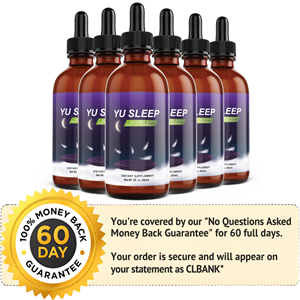
As an example of what to weigh up, Yu Sleep is a liquid taken by dropper, and its official page lists ten ingredients, including melatonin at 0.9 mg per serving. The page lists a minimum 2-month purchase, shown at $138 for two (plus shipping, which may apply, so check at checkout), and advertises a 60-day guarantee. Prices and terms can change, and the page we reviewed gives no guarantee terms, so confirm everything on the official page. The page we reviewed also cites no studies, and we did not see a disclaimer in the text we reviewed, so check the full page footer. If you want our view of whether it suits you, see YU SLEEP (Sleep and Dreams): is it right for you?. For pricing details, read buying YU Sleep: price, where to buy and refunds.
The downsides of any supplement are worth stating plainly: cost, uncertain benefit, possible side effects, and possible interactions with medicines. Ingredients such as 5-HTP, for example, raise specific questions for people on certain medications, which we cover in YU Sleep and antidepressants. More generally, YU Sleep safety, side effects and practical questions and sleep supplements and medications: who should talk to a doctor first explain who should check before trying anything.
Signs that you should see a clinician
- Sleep trouble that lasts for weeks and affects your daytime functioning or mood.
- Loud snoring with gasping, choking or pauses in breathing, which can be a sign of sleep apnea.
- Uncomfortable urges to move your legs in the evening.
- Falling asleep at the wheel or in unsafe situations.
- Relying on alcohol or over-the-counter sleep aids most nights.
- Frequent waking in the night that you cannot explain. Our page on trouble sleeping through the night covers common causes and signs.
If you are pregnant, taking prescription medication, managing a medical condition, or thinking about giving anything to a teenager, speak to a doctor or pharmacist before using any sleep supplement. General information, including ours, cannot account for your history.
In this guide series
Every page in this category is listed below, grouped by topic so you can jump to the area that matches your problem.
Schedule, light and body clock
- How to Fix Your Sleep Schedule: A Gradual Reset Plan
-
Frequently asked questions
Can you really sleep better without buying anything?
For many people, yes. The habits with the best evidence are free: a steady wake-up time, daylight in the morning, less caffeine late in the day, a dark and cool bedroom, and a consistent wind-down. Results vary, and persistent insomnia or symptoms like loud snoring deserve a conversation with a clinician.
What is the first thing to change if I want better sleep?
A consistent wake-up time is a strong starting point, because it anchors your body clock and builds sleep pressure for the following night. Pair it with morning daylight. Keep it up for a couple of weeks before judging, and write down how you feel in a simple sleep diary so you can see patterns.
How long do free sleep habits take to work?
It varies. Some people notice small changes within a week or two, while structured approaches like CBT-I are usually run over several weeks. Expect gradual improvement rather than an overnight fix, and change one or two things at a time so you can tell what is helping.
How many hours of sleep do adults need?
Major US health bodies, including the CDC and the American Academy of Sleep Medicine, recommend that adults get seven or more hours a night. Individual needs differ, so also judge by how you function in the daytime. If you sleep enough hours but feel unrefreshed, mention it to a clinician.
Do I still need a sleep supplement if I fix my habits?
Many people don't, and habits are usually the better first step because they address the causes rather than masking them. If you are considering a supplement anyway, check the ingredients against your medications and health conditions, and ask a pharmacist or doctor first, especially if you take prescription drugs.
When should I see a doctor about my sleep?
Talk to a clinician if sleep trouble lasts for weeks, hurts your daytime functioning, or comes with loud snoring, gasping, breathing pauses, restless legs, or low mood. Also seek help if you are relying on alcohol or sleep aids to get through the night. These can signal conditions that habits alone won't fix.
Should I try Yu Sleep before free fixes?
We'd suggest free fixes first. Yu Sleep's official page shows a minimum purchase of a 2-month package (listed at $138 for two, plus possible shipping, subject to change), and the text we reviewed cites no studies. A 60-day guarantee is advertised, but confirm the full terms on the official page before buying.
In this section
GuideCBT-I Basics: How Cognitive Behavioral Therapy for Insomnia Works at HomeCBT-I at home explained: the core techniques, a step-by-step starter plan, who should get professional help,…
Read GuideSleep Restriction Therapy: How to Try It Safely at HomeSleep restriction therapy how to: set a time-in-bed window, track your sleep, adjust weekly and know when to…
Read GuideStimulus Control Therapy: Rules to Retrain Your Brain to Link Bed With SleepStimulus control therapy uses a few simple rules to retrain your brain to link bed with sleep. Learn each rul…
Read GuideSleep Diary Template: How to Track Your Sleep for FreeA sleep diary template is the cheapest sleep tool there is: a simple log you fill in each day, on paper or on…
Read GuideBedroom Setup for Better Sleep: Free and Low-Cost ChangesBedroom setup for better sleep, step by step: free fixes for light, noise, temperature and bedding, plus low-…
Read GuideHow to Make Your Bedroom Dark and Quiet Without Spending MoneyLearn how to make your bedroom dark for sleep and cut night noise using things you already own. Free blackout…
Read GuideMorning Sunlight and Your Body Clock: How Light Exposure Improves SleepMorning sunlight for sleep: how light exposure sets your body clock, how long to get outside, and a practical…
Read GuideEvening Light, Blue Light and Screens: What Actually Matters Before BedBlue light before bed gets most of the blame for bad nights, and the truth is more useful than the headline.…
Read GuideCaffeine Cutoff Time: When to Stop Drinking Coffee for Better SleepCaffeine cutoff time explained: how half-life works, a starting rule of thumb, a sample schedule and a way to…
Read GuideBest Foods and Drinks Before Bed for Sleep (and What to Skip)Foods that help you sleep, plus the best bedtime snacks and drinks, what to skip, and how to time it. Evidenc…
Read GuideHow to Fix Your Sleep Schedule: A Gradual Reset PlanHow to fix your sleep schedule without misery: a gradual reset plan built on a consistent wake time, morning…
Read GuideNapping and Night Sleep: How to Nap Without Ruining Your NightDo naps affect night sleep? Learn the best nap length, when to nap, and how to handle napping with insomnia,…
Read GuideExercise and Sleep: Best Time and Type of Workout for Better NightsWondering about the best time to exercise for sleep? See how workout timing, type and intensity affect your n…
Read GuideWarm Bath or Shower Before Bed: Does It Help You Fall Asleep?Does a warm bath before bed for sleep work? Learn how body temperature affects sleep, how long before bed to…
Read GuideBreathing Exercises for Sleep: 4-7-8, Box Breathing and Slow BreathingBreathing exercises for sleep explained: how 4-7-8, box breathing and slow breathing work, step-by-step instr…
Read GuideProgressive Muscle Relaxation for Sleep: Step-by-Step ScriptProgressive muscle relaxation for sleep, explained step by step: a full bedtime script, a shorter version, co…
Read GuideThe Military Sleep Method: Does It Really Work?The military sleep method promises sleep in 2 minutes. Here is what the evidence supports, the steps, the dow…
Read GuideBedtime Journaling and the Brain Dump: Clear Your Mind Before SleepJournaling before bed for sleep: how to do a brain dump, write a to-do list or worry journal, what research s…
Read GuideSleep Anxiety: Why Fear of Not Sleeping Keeps You Awake and How to Break ItSleep anxiety, the fear of not sleeping, can keep you awake by itself. Learn why it happens and the practical…
Read GuideRevenge Bedtime Procrastination: Why You Stay Up Late and How to StopRevenge bedtime procrastination explained: why you stay up late on purpose, what research suggests, and a pra…
Read AnswerHow do you sleep on command?How to sleep on command: no switch exists, but a wind-down routine, breathing and a steady schedule make fall…
Read AnswerHow long should you lie awake in bed before getting up?How long should you lie in bed awake before getting up? The common 20 minute rule, how to apply it without a…
Read AnswerWhat is the best temperature for sleeping?The best temperature for sleeping is usually a cool bedroom around 65°F (18°C). Learn the ideal range, how to…
Read