Quick answer: There is little public evidence that this exact 10-ingredient combination works better than its parts. Some pairings are plausible, but synergy is mostly unproven, and the page discloses only one dose (0.9 mg melatonin). Treat the stack as a reasonable idea, not a demonstrated result.
If you are asking whether the ingredients in YU Sleep work together, you are really asking two questions. Does each ingredient have any evidence behind it, and does combining them add something that taking them separately would not? The second question is much harder to answer.
This guide explains the YU Sleep formula, what the official page says about how it works, and what public research can and cannot tell you about stacking. We have not used the product, and we describe only what the page states and what general research supports.
The short version: the combination is plausible on paper, but we found no published trial of this exact formula. Treat "synergy" as a marketing idea until someone shows otherwise.
- The stack spans ten listed ingredients with different proposed roles: sleep timing, relaxation, and nutrient support.
- The only dose the page gives is melatonin at 0.9 mg per serving.
- True synergy (more than the sum of parts) is rarely demonstrated for sleep supplements.
- More ingredients can mean more side-effect and interaction risk, notably 5-HTP.
What the YU Sleep formula says it does
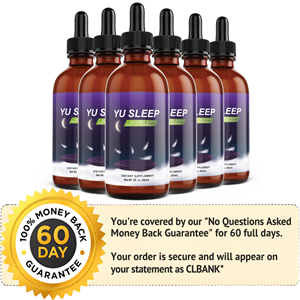
The official page describes Yu Sleep as a "nano-enhanced" liquid taken by dropper: 2 droppers, 30 minutes before bed. It says it supports the brain's "sleep pressure system," including adenosine buildup, natural melatonin release, and a calmer nervous system.
It lists these ingredients: red tart cherry extract, 5-HTP, vitamin B6, vitamin B2, magnesium glycinate, apigenin, lemon balm extract, L-theanine, melatonin, and GABA. The page positions this against high-dose melatonin products that can leave people groggy.
The page credits "Dr. Collins" with decades of research, but the text we reviewed names no studies, credentials or institution. For a fuller breakdown, see What's Inside YU Sleep: Ingredients and How It Works.
What "synergy" actually means
Synergy means the combined effect is larger than adding up each ingredient's effect alone. That is a high bar. It needs a study that tests the combination against its individual parts.
Many supplements instead rely on "additive" logic: several ingredients each do a little, so together they do more. That can be reasonable, but it is a different claim, and it depends on each ingredient being present in a useful amount.
A third possibility is that stacking changes nothing noticeable. Small amounts of many ingredients can add up to little of any one.
The proposed roles of each ingredient
Here is how the ingredients are commonly discussed in general sleep literature, not as claims about this product's results. Evidence quality varies and is often modest.
| Ingredient | Commonly proposed role | Evidence note |
|---|---|---|
| Melatonin (0.9 mg stated) | Circadian timing signal | Better studied for timing issues than general insomnia |
| L-theanine | Relaxation without sedation | Small studies, mixed results |
| Magnesium glycinate | Mineral support, relaxation | Evidence stronger if intake is low |
| Lemon balm | Calming herb | Limited, often combined with other herbs |
| Apigenin | Chamomile-derived compound | Little direct human sleep evidence |
| Red tart cherry | Natural melatonin source | Small studies, varied products |
| 5-HTP | Serotonin precursor | Interaction concerns; thin sleep data |
| GABA | Calming neurotransmitter | Unclear whether oral GABA reaches the brain meaningfully |
| B6 and B2 | Vitamin support | Helpful mainly if deficient |
Our pages on L-theanine, lemon balm and magnesium glycinate go deeper on each.
Plausible pairings, and where the logic gets thin
Melatonin plus a calming ingredient
Pairing a timing signal with a relaxation aid is a sensible design idea. One addresses when the body expects to sleep, the other addresses feeling wound up. But sensible is not proven, and we found no trial of these in this combination.
Low-dose melatonin
The page's 0.9 mg is on the lower end of what is sold. Low doses are often discussed as a way to avoid grogginess, though effects differ by person. See Melatonin 0.9 mg: What a Low Dose Does for Sleep.
Stacking several calming agents
L-theanine, lemon balm, GABA and apigenin all aim at a calmer state. Overlapping goals can be additive, but they also make it impossible to tell which one, if any, is doing the work.
The serotonin question
5-HTP is the ingredient that most warrants a pharmacist's attention, because it affects serotonin. If you take antidepressants or other serotonergic medicines, read Serotonin Syndrome: Symptoms, Causes and When to Get Emergency Help and ask a professional before trying it.
The missing piece: doses
Synergy research depends on amounts. In the text we reviewed, the page gives only melatonin's dose. We saw no full supplement facts panel, so you cannot tell how much of any other ingredient you would get.
That matters because studies use specific amounts. If a formula contains far less than a studied dose, the research does not transfer. If it contains more, side-effect risk may differ too. Our page on YU Sleep dosages covers this in detail.
See the details, current pricing and who it suits.
Check current optionsAffiliate link: we may earn a commission at no extra cost to you.Does "nano-enhanced" change the stacking picture?
The page says the formula is nano-enhanced. The idea is usually better absorption. We did not find public evidence in the page text showing what this means for each ingredient, or that it improves sleep outcomes.
Better absorption could cut both ways: it might make ingredients more effective, or it might make a given dose act more strongly than you expect. Read Nano-Enhanced Sleep Formulas for what evidence exists.
 Recommended for youWhat's Inside YU Sleep: Ingredients and How It Works
A checklist for judging any sleep stack
- Are all doses listed? If not, you cannot compare with research.
- Do the doses resemble studied amounts? Check each ingredient on its own.
- Does each ingredient have a distinct job? Overlap adds complexity, not proof.
- Is there a trial of the finished product? Studies of single ingredients do not prove the blend.
- What are the interaction risks? More ingredients mean more to check against your medicines.
- Are the claims modest? Be cautious about "permanent fix" or "sleep like a baby" language.
Our guide to reading a sleep supplement label walks through these in more detail.
What the evidence supports so far
Based on what we reviewed, the honest position is this. Individual ingredients have varying, mostly modest research. The page cites no studies for the combined formula. Claims of synergy are therefore a hypothesis.
That does not mean it cannot help you. Some people respond to supplements for reasons that include expectation, routine and a calmer bedtime. But you should not buy it expecting proof of an effect. For the wider picture, see Does YU Sleep Work? What the Evidence Supports and our marketing claims fact-check.
If you decide to try it: practical steps
- Check with a doctor or pharmacist first if you are pregnant, take prescription medicines, or have a health condition. Our pages on blood pressure medication and diabetes cover two common concerns.
- Track your sleep for a few weeks before and after using a free sleep diary, so you judge it on data and not memory.
- Change one thing at a time. If you alter your caffeine, screens and supplement together, you cannot tell what helped.
- Read the full guarantee terms on the official page. It advertises 60 days, but we saw no refund conditions in the text we reviewed.
- Confirm prices on the official page. The page shows discounted packages, with a 2-month minimum and shipping that may apply, and these can change.
Free options that may matter more than the stack
Consistent wake times, a dark room, less evening light and a wind-down routine have solid support. They cost nothing and combine well with any supplement decision. See Sleep Better Without Buying Anything and evening light and screens.
If you wake at night or feel anxious about sleep, causes of trouble sleeping through the night and sleep anxiety may point to something a supplement will not fix.
Next steps
To weigh the product itself, start with what's inside YU Sleep, then compare it using YU Sleep vs alternatives. If you are considering a purchase, see buying YU Sleep for pricing and refund questions.
When you want a summary of fit, our page YU SLEEP (Sleep and Dreams): is it right for you? pulls the considerations together.
Frequently asked questions
Do the ingredients in YU Sleep work together?
The ingredients target different parts of sleep, so a combined approach is plausible. But we found no public trial of this specific combination, and the official page cites no studies. Any added benefit from stacking is unproven, so treat it as a hypothesis rather than a result.
Does stacking sleep ingredients work better than one ingredient?
Not necessarily. Stacking can add small effects from several ingredients, but it can also dilute each one below a useful amount. Evidence for true synergy, meaning more than the sum of the parts, is rare in sleep supplements. Doses matter more than the number of ingredients.
What is the YU Sleep formula explained simply?
It is a liquid taken by dropper that lists ten ingredients: red tart cherry, 5-HTP, B6, B2, magnesium glycinate, apigenin, lemon balm, L-theanine, melatonin (0.9 mg stated) and GABA. The page says it supports sleep pressure, melatonin release and a calmer nervous system.
Does YU Sleep disclose the dose of each ingredient?
In the page text we reviewed, only melatonin is given a dose: 0.9 mg per serving. Other amounts are not stated, and we saw no full supplement facts panel. Without doses, you cannot compare the formula with research that used specific amounts.
Can combining sleep ingredients cause problems?
It can. More ingredients means more chances of side effects or interactions, especially with medications. 5-HTP in particular affects serotonin, so check with a pharmacist or doctor first if you take antidepressants or other prescriptions.
How can I tell if a sleep supplement stack is well designed?
Look for disclosed doses per ingredient, doses close to those studied, a short list of ingredients with distinct roles, and no claims beyond the evidence. Be wary of blends listing totals only, or of studies cited for single ingredients as if they proved the whole product.
Is the 60-day guarantee a good way to test the stack?
The page advertises a 60-day guarantee, but we saw no terms in the text we reviewed. Read the full terms on the official page first, including shipping and opened-bottle rules, before treating it as a low-risk trial.
Keep reading
 YU Sleep Dosages: Are the Ingredient Amounts Disclosed and Clinically Meaningful?YU Sleep ingredient amounts: what the page discloses (only melatonin at 0.9 mg), what it leaves out…
 How to Read a Sleep Supplement Label: Doses, Blends and Red FlagsLearn how to read a sleep supplement label: check doses, spot proprietary blend red flags, and use…
 Melatonin 0.9 mg: What a Low Dose Does for SleepMelatonin 0.9 mg explained: what a low, physiological dose can and can't do, how timing matters, wh…