- Start with the Supplement Facts panel
- Doses: why the number matters more than the name
- What a proprietary blend means
- Sleep supplement ingredients to look for (and what to ask about each)
- Red flags on a sleep supplement label or sales page
- Buzzwords: "all-natural," "nano-enhanced," "clinically studied"
- Reading a real example: what Yu Sleep's page shows and leaves out
- Check price per serving and purchase terms
To read a sleep supplement label, start with the Supplement Facts panel: serving size, amount of each ingredient, and any proprietary blend. Disclosed doses let you compare against research. Hidden amounts, vague claims and missing third-party testing are red flags. Check with a pharmacist or doctor about interactions.
Knowing how to read a sleep supplement label is the fastest way to separate a clear product from a vague one. The front of the bottle sells; the back tells you what is actually inside. This guide walks through each part of a label, explains what a proprietary blend means, and ends with a checklist you can use in a shop or at a checkout page.
We are an independent publication, so we stick to what labels, official pages and public research show. We have not used any product mentioned here, and we point out downsides as well as strengths. This is general information, not medical advice.
Along the way we use one real example, Yu Sleep, to show what a label review looks like when some information is missing.
- Look for an amount next to every active ingredient, not just a list of names.
- A proprietary blend hides individual doses, so you cannot compare it with research.
- Marketing language, testimonials and review counts are not evidence.
- Check for interactions with a pharmacist or doctor before you start.
Start with the Supplement Facts panel
In many countries, a supplement sold in stores carries a panel titled "Supplement Facts" (or similar). It is the part that matters most. Marketing text on the front is not regulated in the same detail.
Read it in this order:
- Serving size. Is it one capsule, two gummies, or a measured amount of liquid? Every number below is per serving.
- Servings per container. This lets you work out the real cost per night.
- Each active ingredient and its amount. Look for a number with a unit, such as mg or mcg.
- The form of each ingredient. "Magnesium" alone says little; the compound matters.
- Other ingredients. Sweeteners, flavors, fillers and allergens live here.
Doses: why the number matters more than the name
Nearly every sleep ingredient has been studied at particular amounts. A product can list an ingredient and still contain far less than anything tested. A name on the front tells you nothing about whether the amount is meaningful.
When you see an amount, do three things. Compare it with the amounts discussed in public research, which is easy to find for common ingredients. Check whether the stated amount is per serving or per day. And check how many servings the directions tell you to take.
Our ingredient pages cover typical amounts and side effects for several common ones, including magnesium glycinate, L-theanine and lemon balm extract.
Melatonin needs extra attention
Melatonin is a hormone, and products vary a lot in how much they contain. A label should state the amount clearly. Some people find higher amounts leave them groggy; others notice vivid dreams even at low amounts.
If a product includes melatonin, read the figure carefully and compare it with what a low dose such as 0.9 mg does. Our page on low-dose melatonin side effects lists who should be careful.
What a proprietary blend means
A proprietary blend lists several ingredients under one name and gives a single total weight. You see the combined amount, not the amount of each. Companies say this protects formulas. For a buyer, it removes the main thing you need to judge a product.
Here is why it matters. If a blend totals a modest weight and lists eight ingredients, each one must be present in a small amount on average. Ingredients are usually listed in descending order by weight within the blend, but "first" could still be a large share or a trace.
| Label style | What you can tell | What you cannot tell |
|---|---|---|
| Each ingredient with its own amount | Dose per serving; comparison with research | Quality of the raw material |
| Proprietary blend with total weight | Combined weight; order of ingredients | Dose of each ingredient |
| Ingredient names only, no amounts | What is present | Almost everything else |
A blend is not proof of a bad product. It is a reason to ask for more detail, or to choose a product that discloses amounts. For a worked example, see our page on whether Yu Sleep's ingredient amounts are disclosed and meaningful.
See the details, current pricing and who it suits.
Check current optionsAffiliate link: we may earn a commission at no extra cost to you.Sleep supplement ingredients to look for (and what to ask about each)
No ingredient is a guaranteed fix, and the quality of evidence varies. Use this list as a set of questions, not a shopping recommendation.
- Melatonin: Is the amount stated? Is it the only active ingredient, or combined with others?
- Magnesium: Which form is it, and how much elemental magnesium is in a serving?
- L-theanine: Is there a stated amount per serving?
- Lemon balm: Is it an extract, and is the extract strength given?
- 5-HTP: Is it on the label with an amount? It affects serotonin, so check for medication interactions, especially with antidepressants.
- GABA and apigenin: Is the amount listed? Evidence for oral use is less settled than for some others, so be cautious about big claims.
- B vitamins: Are amounts shown? Some people report vivid dreams with B6, covered in our page on vitamin B6 and dreams.
More ingredients does not mean a better product. Our page on whether ingredients work together explains why stacking claims need evidence of their own.
Red flags on a sleep supplement label or sales page
Some warning signs appear on the label; others show up on the page selling it. Here are the ones worth noting.
- Hidden amounts. Blends, or no amounts at all.
- Cure and permanence language. Phrases like "permanent fix" or "results don't stop when you do" are not claims a supplement can support.
- Testimonials as proof. Individual stories are not studies, and review counts without a source cannot be checked.
- Research that is never named. "Decades of clinical research" without a single study you can look up.
- Per-ingredient miracle claims. One herb said to fix cortisol, weight and 3 AM waking at once.
- Unclear seller details. No company name, address or support contact.
- Vague guarantee terms. A headline number of days with no conditions.
- Missing warnings. No notes about pregnancy, medications or driving.
Buzzwords: "all-natural," "nano-enhanced," "clinically studied"
Words on a label can sound technical without telling you anything checkable. "Natural" does not mean safe or effective; many natural substances cause side effects or interact with drugs.
"Nano-enhanced" suggests better absorption. Ask what it means and what evidence supports it for this product. We cover this in our explainer on nano-enhanced sleep formulas.
"Clinically studied" should lead to a named study on the finished product, or on each ingredient at the amount used. If a study tested an ingredient alone at a higher dose, it does not support a blend with a small amount.
 Recommended for youMagnesium Glycinate for Sleep: Research, Typical Amounts and Side Effects
Reading a real example: what Yu Sleep's page shows and leaves out
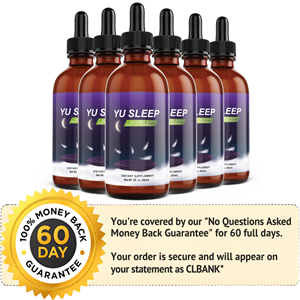
Yu Sleep is a liquid taken by dropper, and its official sales page describes it as an "all-natural nano-enhanced sleep formula." The page directs 2 droppers 30 minutes before bed. Using the label checklist above, here is what we could and could not see in the text we reviewed.
| Label question | What the page shows |
|---|---|
| Ingredients listed? | Yes: red tart cherry extract, 5-HTP, vitamin B6, vitamin B2, magnesium glycinate, apigenin, lemon balm extract, L-theanine, melatonin and GABA. |
| Amounts per ingredient? | Only melatonin, which the page states as 0.9 mg per serving. We did not see amounts for the others. |
| Full Supplement Facts panel? | Not in the text we reviewed, nor serving count or bottle size. |
| Named studies? | The page refers to research and to "Dr. Collins," but we saw no studies cited and no credentials given. |
| Company details? | No company name, address or support contact in the extracted text. |
| Guarantee? | The page advertises a 60-day guarantee; we saw no terms. Read the full terms before buying. |
| Disclaimer? | We did not see one in the text we reviewed; check the full page footer. |
This does not mean the product is poor. It means several checklist items could not be confirmed from the page text, so confirm them yourself. The page also makes strong claims, such as fast results and a 3 to 6 month "reset," which we treat as the seller's claims, not established facts.
For more, see what's inside Yu Sleep, reviews, complaints and trust, and the guide to returns and refunds.
Check price per serving and purchase terms
A label is only half the picture. Work out cost per night, and read the purchase terms before paying.
- Divide the total price by servings, or by nights of use. Prices on sales pages can change, so confirm on the official page.
- Check whether shipping applies. Yu Sleep's page shows "+ shipping" on its 2-month package, so shipping may apply; check at checkout.
- Look for minimum purchases. The page says Yu Sleep is not sold in smaller packs than 2 months.
- Read the refund terms: conditions, return process, and whether shipping is refundable.
- Be wary of "while supplies last" urgency; it is a sales tactic, not a reason to skip the checks.
Our guide to buying Yu Sleep covers price and where to buy in more detail.
Safety checks before you start
A label check is not a safety check. Talk to a pharmacist or doctor if you take medication, are pregnant or nursing, have a medical condition, or are giving a product to a young person. Sleep problems that last can also have causes a supplement will not address.
- Medications: Ingredients like 5-HTP may matter if you take antidepressants. See 5-HTP, serotonin and interaction risks.
- Allergies: Check "other ingredients" and allergen lines. See ingredient allergies and sensitivities.
- Alcohol: Combining sleep aids with alcohol deserves caution; see alcohol and Yu Sleep.
- Age: Do not assume adult products suit teenagers; see teenagers and Yu Sleep.
- Dependence concerns: See what to look for in non-habit-forming options.
The sleep supplement label checklist
Copy this into your notes and score any product you are considering.
- Is there a full Supplement Facts panel with serving size and servings per container?
- Does every active ingredient have its own amount?
- Is the form of each ingredient named?
- Is any part of the formula hidden in a proprietary blend?
- Is melatonin, if present, stated clearly?
- Do the amounts match what public research discusses?
- Are studies named, or just referred to?
- Is there third-party testing, and can you verify it?
- Are company name and contact details given?
- Are warnings and allergen information present?
- Are refund terms written in full?
- Have you asked a pharmacist or doctor about interactions?
If several answers are "no" or "can't tell," pause. Compare formats in our guide to drops, gummies, capsules and powders, or look at sleep habits that cost nothing first.
Next steps
If you are weighing Yu Sleep specifically, start with its dosage disclosure page and who it is for and who should skip it. Our recommendation page can help you decide whether it fits your situation.
If you wake at night, read why you might wake at 3am, and consider trying breathing exercises or CBT-I basics, which do not involve a label at all.
Frequently asked questions
What does proprietary blend mean on a supplement label?
A proprietary blend lists ingredients together with one total weight instead of an amount for each. Ingredients are usually ordered by weight, but you cannot tell how much of each you get. That makes it hard to compare the product with the doses used in research.
What should I look for on a sleep supplement label?
Look for a full Supplement Facts panel, the serving size, an amount for every active ingredient, the form of each ingredient, and a clear list of other ingredients. Also check for allergen statements, warnings, and whether any third-party testing seal appears.
How much melatonin should a sleep supplement contain?
There is no single right amount for everyone. Products range widely, and lower doses are common in research and on shelves. Check the label amount, start by asking a pharmacist or doctor, and be cautious if the product does not state its melatonin content at all.
Are sleep supplement ingredients ordered by amount?
In a proprietary blend, ingredients are generally listed from most to least by weight, but exact amounts are hidden. Outside a blend, each ingredient should have its own stated amount. Do not assume the first ingredient is present at a useful dose.
What are red flags on a sleep supplement?
Red flags include hidden doses, promises to cure insomnia, claims of permanent results, testimonials used as proof, citing research without naming studies, and unclear company details. Missing warnings or vague refund terms are also worth noting before you buy.
Does a supplement label prove the product works?
No. A label tells you what is in the bottle and how to take it, not whether it works. Supplements are not approved for effectiveness the way medicines are. Compare each listed dose with public research and talk with a clinician if you have a health condition.
Can sleep supplements interact with medications?
Yes, some can. Ingredients such as melatonin, 5-HTP and herbal extracts may interact with antidepressants, sedatives, blood thinners or other drugs. Bring the label to a pharmacist or doctor before combining products, especially if you are pregnant, nursing or managing a condition.
Keep reading
 Lemon Balm Extract for Sleep: Research, Typical Amounts and Side EffectsLemon balm for sleep: what the research shows, typical amounts in studies, side effects, who should…
 L-Theanine for Sleep: What Research Says, Amounts and Side EffectsL-theanine for sleep: what research suggests, typical nighttime amounts, possible side effects, and…
 Melatonin 0.9 mg: What a Low Dose Does for SleepMelatonin 0.9 mg explained: what a low, physiological dose can and can't do, how timing matters, wh…